A Swiss researcher is spending the spring in Lincoln to learn more about an innovative program designed to improve children’s academic, social and behavioral outcomes while building stronger, more effective relationships among parents and teachers.
Caroline Villiger, professor and head of the “Family–Education–School” research program at the University of Teacher Education in Bern, Switzerland, arrived in Lincoln April 14 to study the Teachers and Parents as Partners (TAPP) program, which was developed at the University of Nebraska–Lincoln and supports school-age children who are struggling with a variety of behavioral, social and academic challenges.
Villiger will deliver a presentation titled, “Building Bridges Between Home and School — Insights from Switzerland,” on May 7 from 3-4 p.m. CDT at Carolyn Pope Edwards Hall, Room 227.
In 2024, Villiger discovered TAPP, reading about the Nebraska Center for Research on Children, Youth, Families and Schools, and its director, Sue Sheridan, who created TAPP.
I was wondering where I could go to get inspired about research on family-school relationships, and that’s when I learned about the research of Sue and her team, and the center,” Villiger said.
She contacted Sheridan and discussed the possibility of visiting UNL to learn more about the TAPP and discussing how it might be implemented in Switzerland.
Although the conditions for citizens in Switzerland and the U.S. are different, I want to focus and reflect on the core elements of TAPP and how the approach can be changed and modified — without losing its efficacy — for implementation in Switzerland.”
— Caroline Villiger, Ph.D.
During a vacation to Switzerland last October, Sheridan finally met Villiger and even made a presentation about TAPP’s successes at her university.
TAPP’s success is well-documented. When schools participate in the family-school partnership program, parents and teachers work together in a dynamic problem-solving process, focusing on student strengths to create a tailored success plan and track progress. TAPP has consistently delivered positive results across both rural and urban classrooms.
The intervention has been implemented in Nebraska, Colorado, Missouri, Wisconsin and rural Appalachian communities, expanding its reach in recent years through distance technology. Hundreds of students and their parents and teachers, across hundreds of schools, have benefited from TAPP.’
In Switzerland, Villiger said, educators often lack well-developed approaches to building positive parent-teacher relationships. As a result, she said, teachers frequently experience contacts with parents as a burden.
“TAPP offers a strong conceptual framework and serves as an excellent example of effective parent–teacher collaboration,” Villiger said. “Although the conditions for citizens in Switzerland and the U.S. are different, I want to focus and reflect on the core elements of TAPP and how the approach can be changed and modified — without losing its efficacy — for implementation in Switzerland.”
For Villiger, Lincoln is her first extended destination in the U.S. Although she hasn’t yet seen much of Lincoln, her impression is that “it’s a young, very dynamic city.”
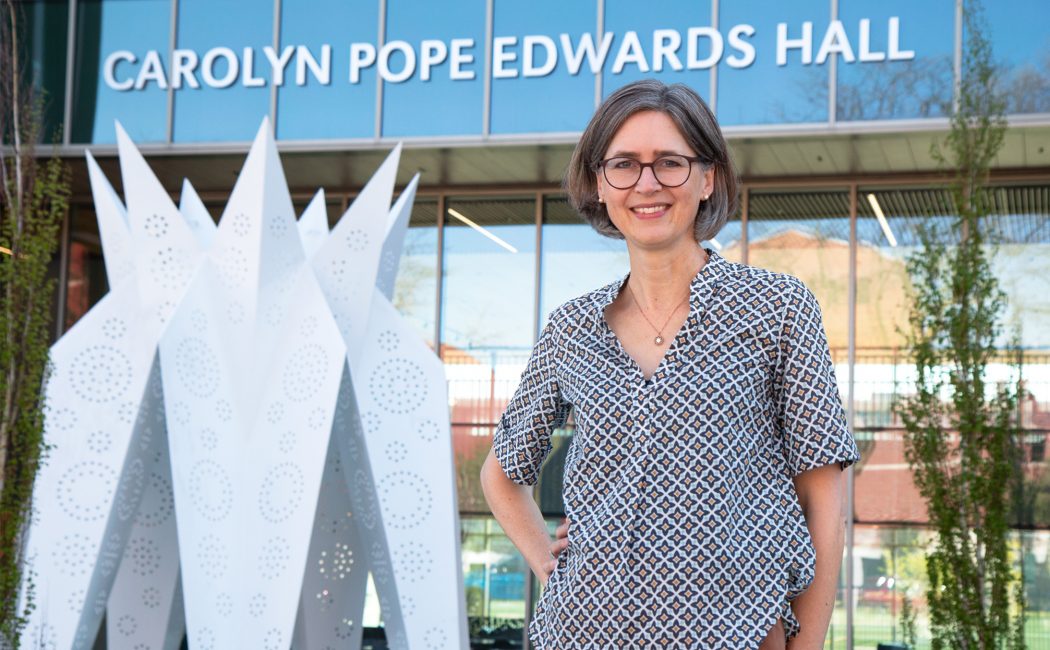
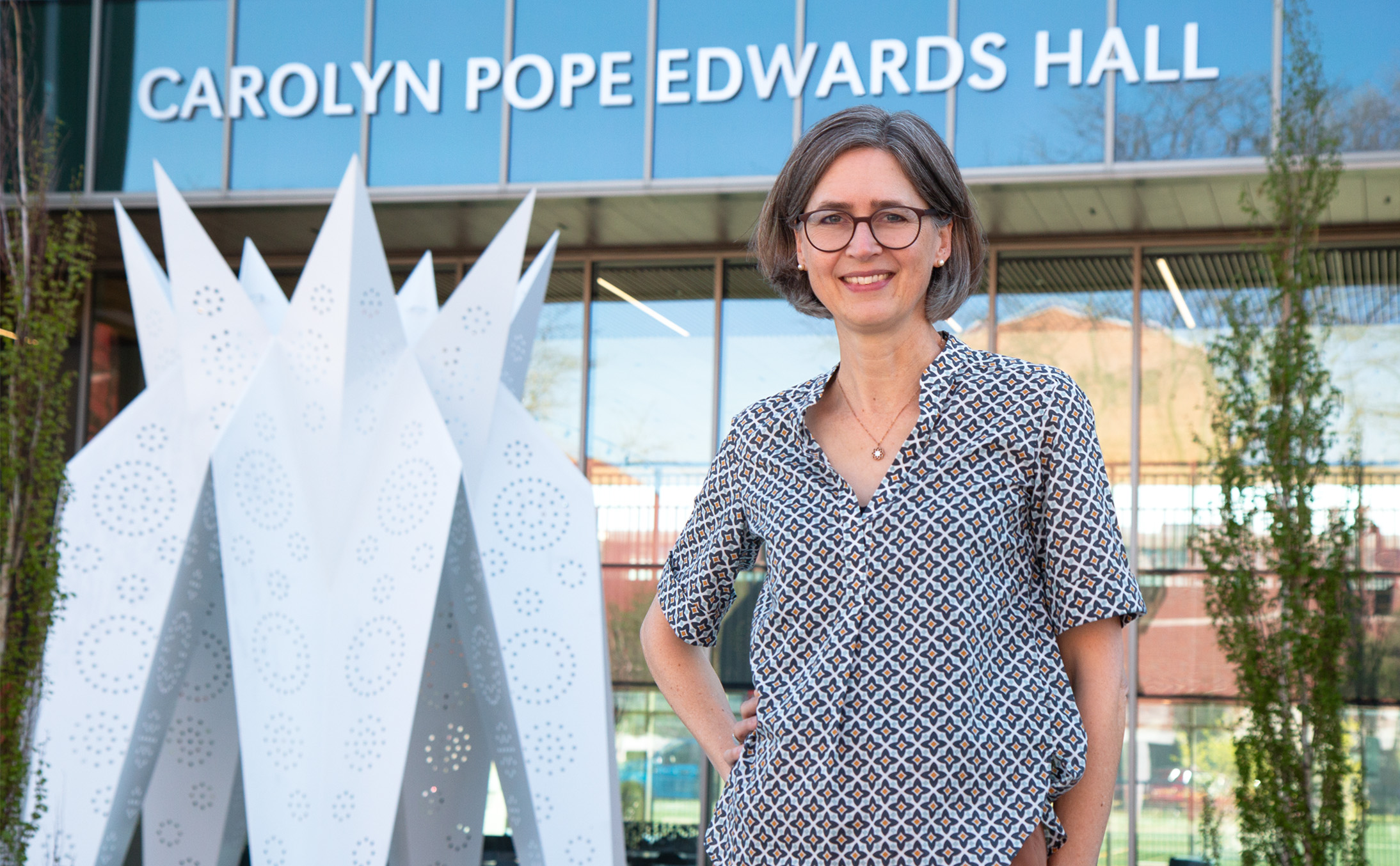
“And the center is amazing,” said Villiger, who will return to Switzerland May 15. “Carolyn Pope Edwards Hall is such a beautiful building. I love the natural light, as well as the offices and learning spaces. It’s motivating; it makes you want to learn.”
TAPP aligns with Villiger’s research interests, which include parent-teacher relationships, collaboration between family and school, fostering reading and self-regulation, parental involvement and intervention studies.
“I’ve always wanted to have an impact on the lives of children, to help them find their way through life by building on their educational trajectories,” she said. “I see TAPP as a very effective way of doing that.”