For autistic people — especially those with intellectual disabilities, or others with extensive support needs — communicating needs and ideas can be difficult. Many rely on intense individualized support and educational interventions.
When spoken words are not enough, alternative and augmentative communication (AAC) is often needed to meet their daily needs and wants. Common methods include gestures or facial expressions, sign language and speech-generating mobile apps for iPads or phones. While these methods can be helpful, they can also be costly and tricky to use effectively as treatments.
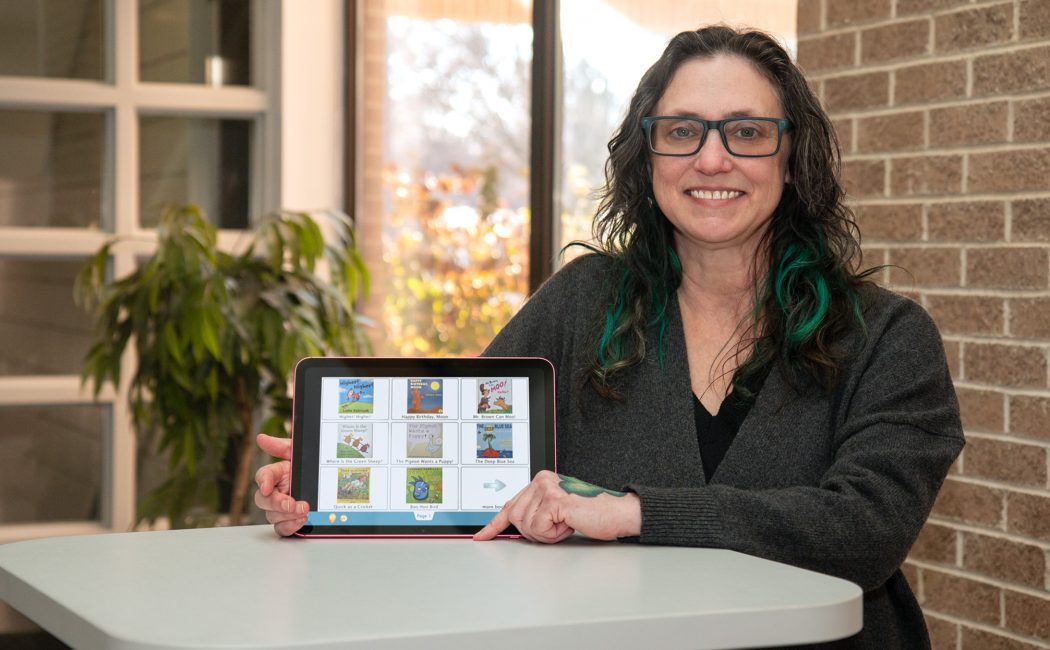
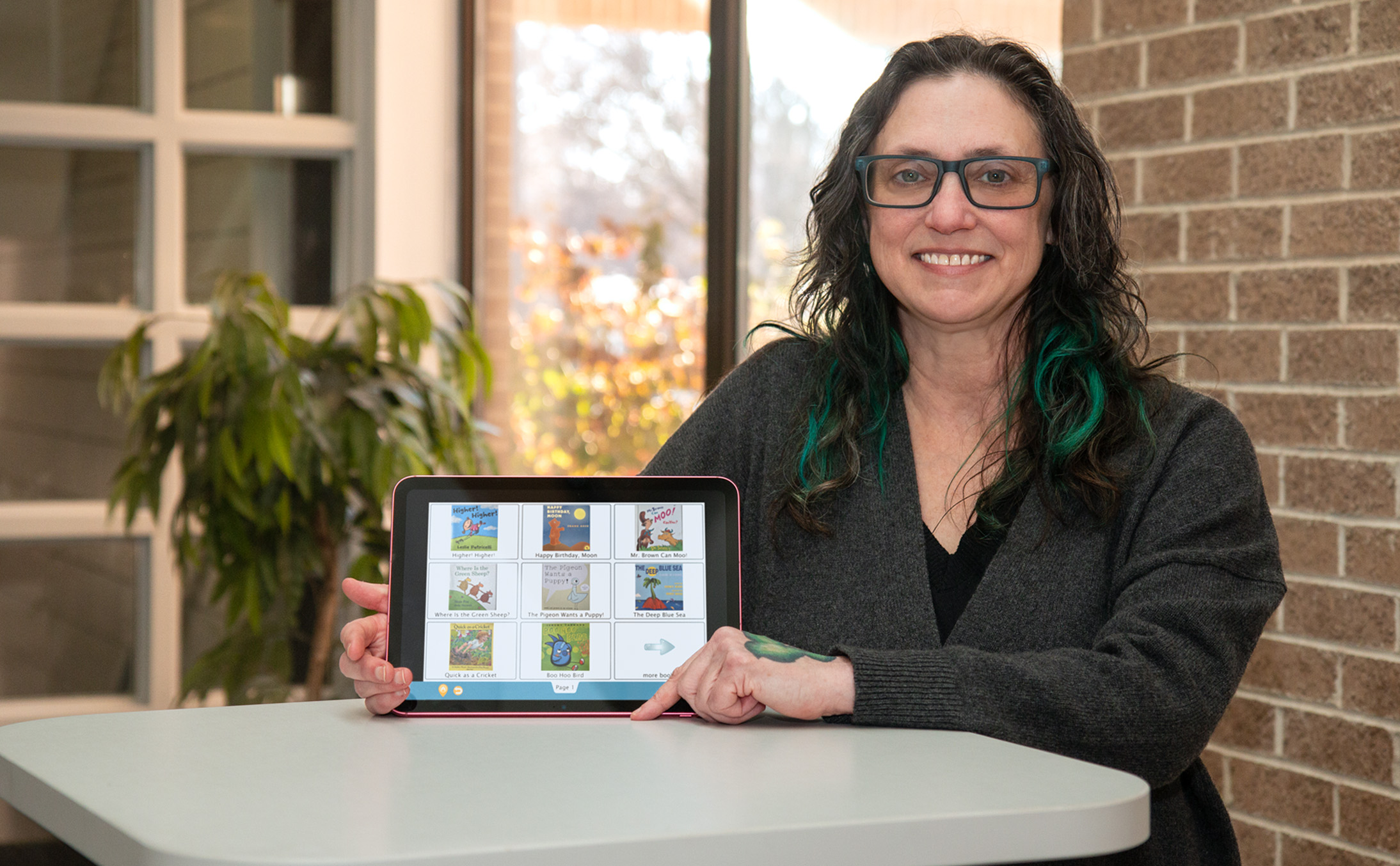
Birdie Ganz, professor of special education and communication disorders, recently led a project focused on developing guidelines for teachers and parents on how to select and implement communication enhancement treatment for autistic children — such as speech therapy, or behavioral therapy aimed at changing the environment and how interventions are implemented, which can support learning and communication — or AAC, with the goal of improving outcomes.
The study analyzed existing, published data to see how treatment intensity — such as how often and how long it is provided — relates to how well AAC works for autistic and intellectually and developmentally disabled children.
Communication opens the door for almost all areas of learning, especially social learning and literacy. It’s important that everyone has opportunities to learn such foundational skills.”
— Birdie Ganz, principal investigator
Findings showed that despite promising advances in AAC and other communication supports for those with autism, more research is needed. Researchers discovered that many studies did not fully report the intensity of treatments, making it hard to understand what level of support works best.
“Children with autism in particular, and intellectual disabilities, tend to require more intense interventions than kids with other disabilities, or typically developing kids,” said Ganz, a CYFS research affiliate. “Given these limited resources, we need to figure out the most efficient ways of providing these services while still having good outcomes.”
Funded by the Institute of Education Sciences, Ganz analyzed articles on AAC for school-aged autistic and intellectually disabled children, including 70 experiments encompassing 192 participants. Their investigation focused on how treatment intensity was measured and reported, and how child characteristics interacted with intensity levels.
“The biggest takeaway is that AAC is effective, but also that researchers need to better report dosage and treatment intensity,” Ganz said.
Ganz found that most treatment intensity variables were not systematically linked with how well AAC works, and that “massed trials” — practicing the same skills multiple times in a row — had significantly higher effects than “distributed trials,” in which new skills were practiced more naturally and interspersed with other skills. However, more frequent implementation of massed trials skewed results.
To better understand how to serve all minimally verbal and nonspeaking children, Ganz said, studies must include participants from a wide range of backgrounds.
“Often, researchers don’t report race/ethnicity, and language, and when they do report it, we have found that participants are mainly white and English-speaking,” Ganz said. “So we don’t know what kinds of cultural or linguistic adaptations will best serve this population.”
Ganz aims to use findings to recommend standards for more complete reporting so additional studies can be conducted and replicated.
“Communication opens the door for almost all areas of learning, especially social learning and literacy,” Ganz said. “It’s important that everyone has opportunities to learn such foundational skills.”
Learn more about this project in the CYFS Research Network.