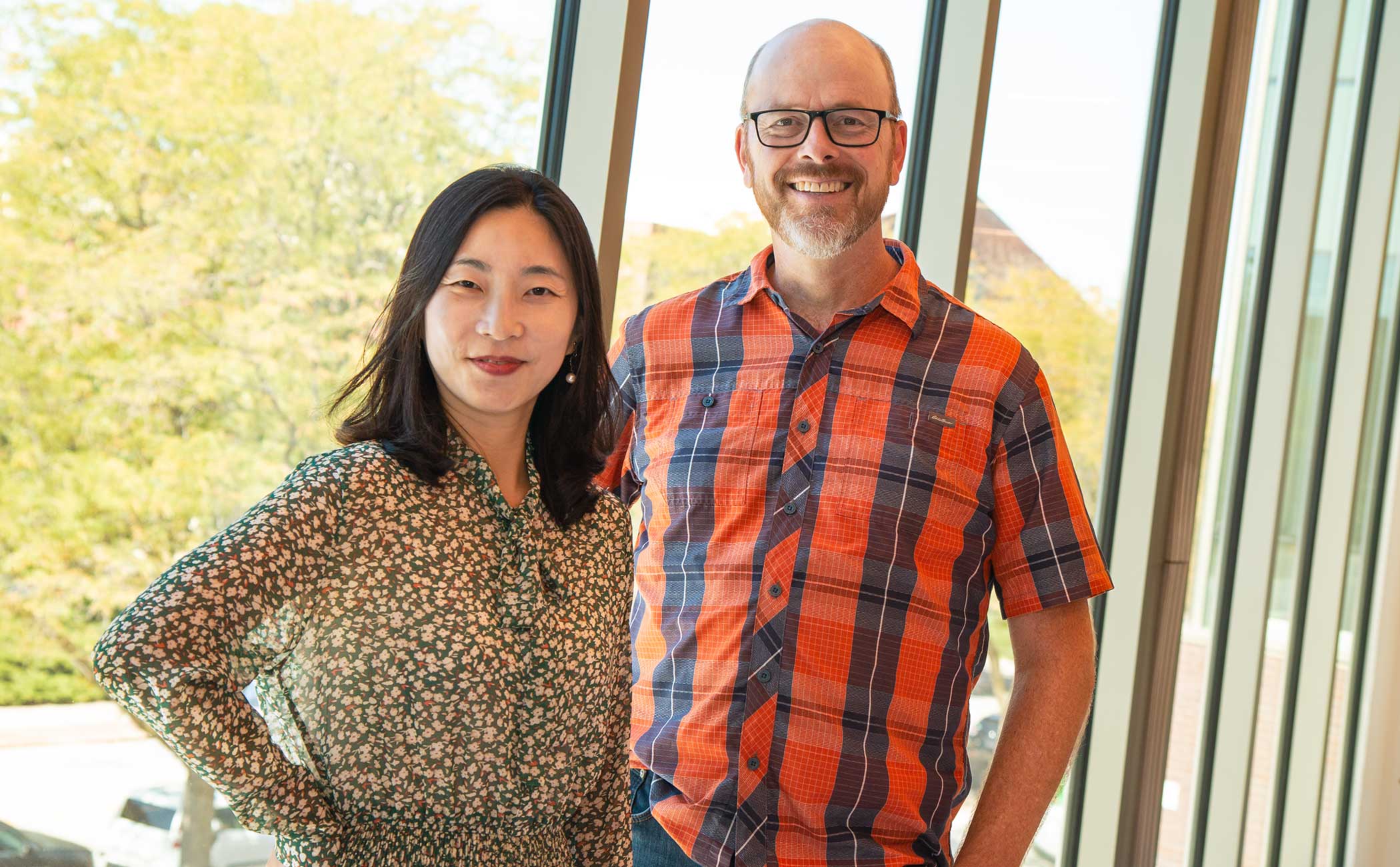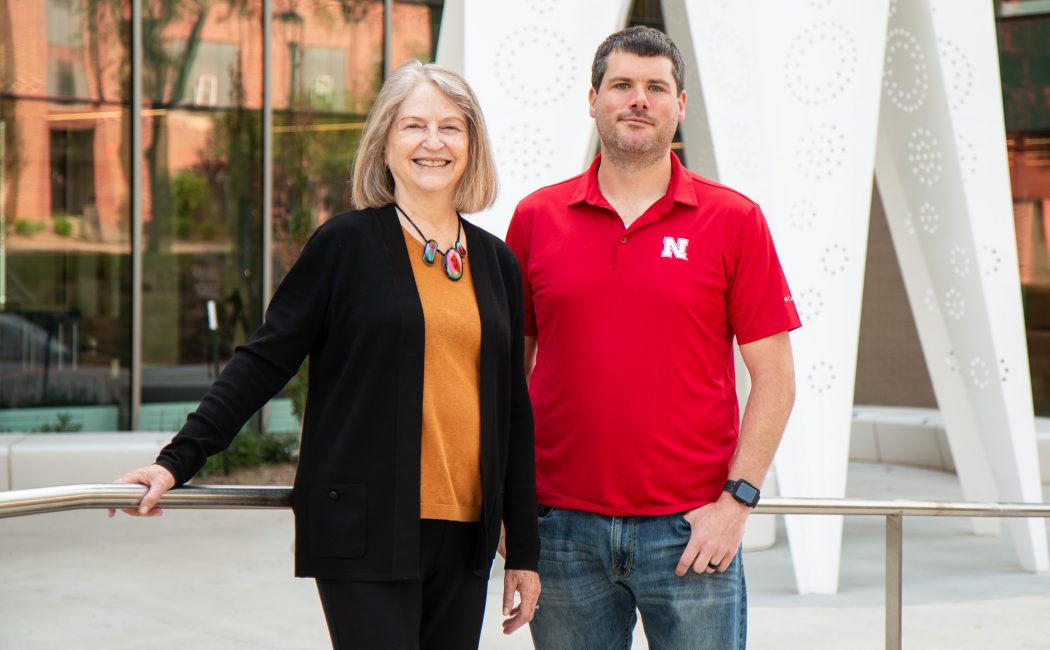
Developed by The Set Me Free Project, READY to Stand is a curriculum designed to help prevent sex trafficking, particularly among racially and ethnically diverse children. Learn more about this project in the CYFS Research Network and on the Interpersonal Violence Research Laboratory website.
Although sex trafficking of children is a significant crisis in the U.S., little research has been done to explore prevention. A partnership between the University of Nebraska–Lincoln and Iowa’s largest school district is exploring ways to address the challenge.Full Article
Years ago, when Sarah Zuckerman worked as a special education teacher in Washington, D.C., she saw firsthand the myriad of educational and health needs her students brought with them to school.
Increasing access to more nutritious food, medical care and mental health services seemed to be constant needs she saw every day.Full Article
Nebraska researchers are leading a five-year multi-institutional project to better understand sexual assault experiences of U.S. sexual minority men, and to inform prevention and response efforts. Learn more about this project in the CYFS Research Network and on the IVRL website.
Research demonstrates rates of sexual assault and perpetration among sexual minority men are alarmingly high across the U.S.
Some studies reveal almost half of sexual minority men experience being threatened by sexual assault as adults, and as many as 30% report being sexually assaulted in their lifetime.Full Article
The RISE with Insects research team includes, from left, Susan Weller, director of the University of Nebraska State Museum; Sarah Roberts, Extension educator in science and nature education for early childhood; Ana María Vélez Arango, assistant professor of insect toxicology; Louise Lynch-O’Brien, assistant professor of insect biology and Extension specialist; and Holly Hatton-Bowers, associate professor of child, youth and family studies and Extension specialist. Learn more about this project in the CYFS Research Network.
After decades of work, many researchers believe climate change poses the greatest global threat to human health — and that youth are the most vulnerable to the impacts and most-dire consequences, both today and in the future.
Black, Latinx, Native American and other youth of color may be disproportionately affected by climate change with deepening inequalities in access to clean air and water, healthy foods and forced migration.Full Article
Funded by a $3.2 million UNL Grand Challenges Catalyst Award, Nebraska researcher Katie Edwards is leading a four-year project to establish an Indigenous-led sexual violence prevention facility on the Pine Ridge Indian Reservation in South Dakota. Learn more about the project in the CYFS Research Network.
For the past six years, Nebraska educational psychologist Katie Edwards has worked with Native American communities and organizations to combat sexual violence — a trauma Indigenous peoples experience at rates higher than any other racial or ethnic group in the U.S.Full Article
By Haley Apel, CEHS Director of Strategic Communications
Because today’s fast-paced world demands constant innovation in the areas of science, technology, engineering and mathematics, STEM-related occupations continue to grow at a faster rate than those in non-STEM related fields.Full Article
Researchers investigating undergraduate students’ strategies for completing out-of-class homework include, front row, from left: Allison Upchurch, Dana Kirkwood-Watts and Brian Couch. Back row, from left: Lorey Wheeler, Kati Brazeal, Sarah Spier and Gabrielle Johnson. Learn more about this project in the CYFS Research Network.
As learning environments increasingly rely on online course formats that work with busy college student schedules — particularly after disruptions caused by the COVID-19 pandemic — a better understanding of how students complete out-of-class assignments is crucial to ensuring equitable opportunities for academic success.Full Article